



Topology Optimization Publication Appears in Advanced Materials
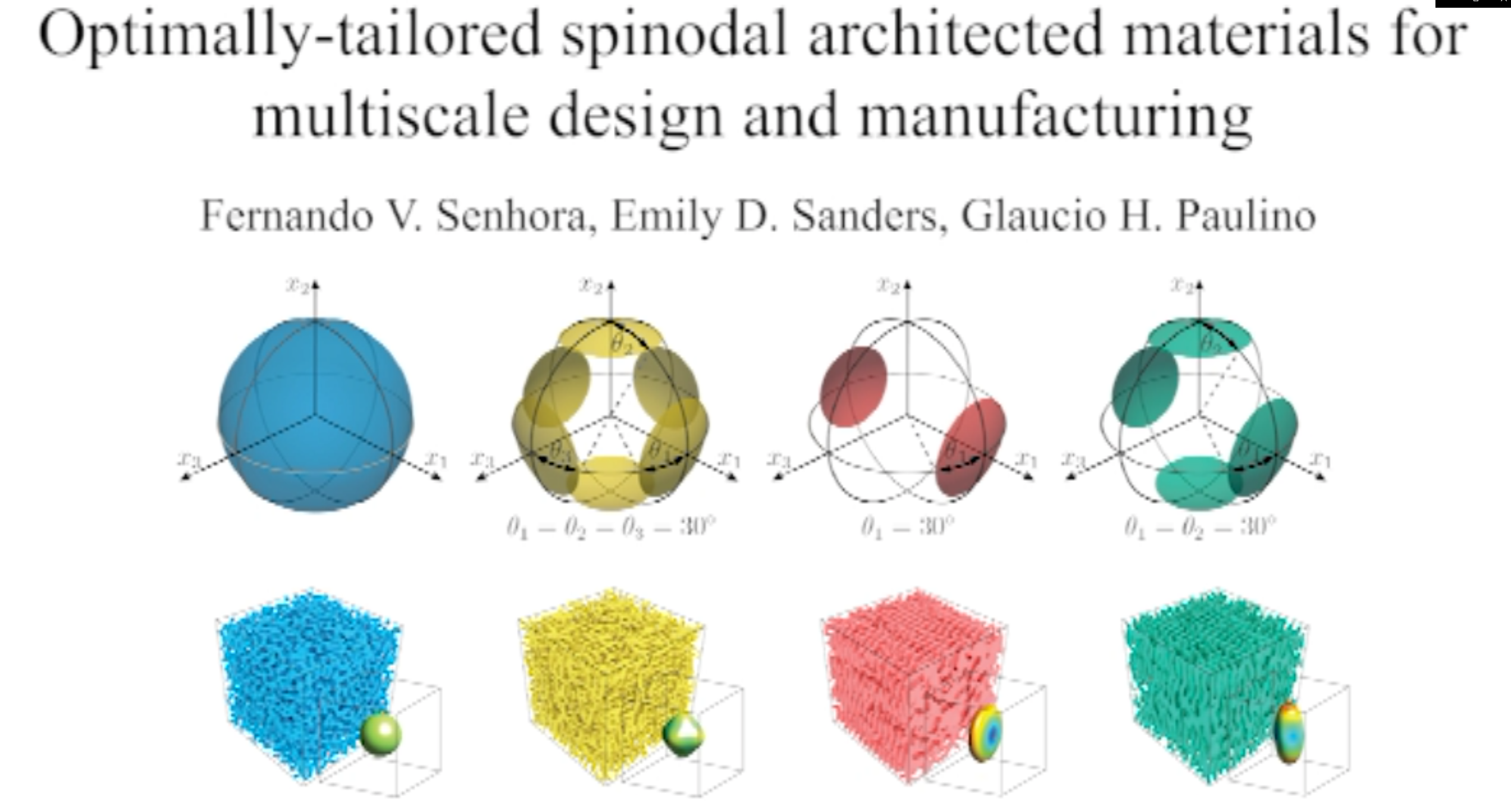
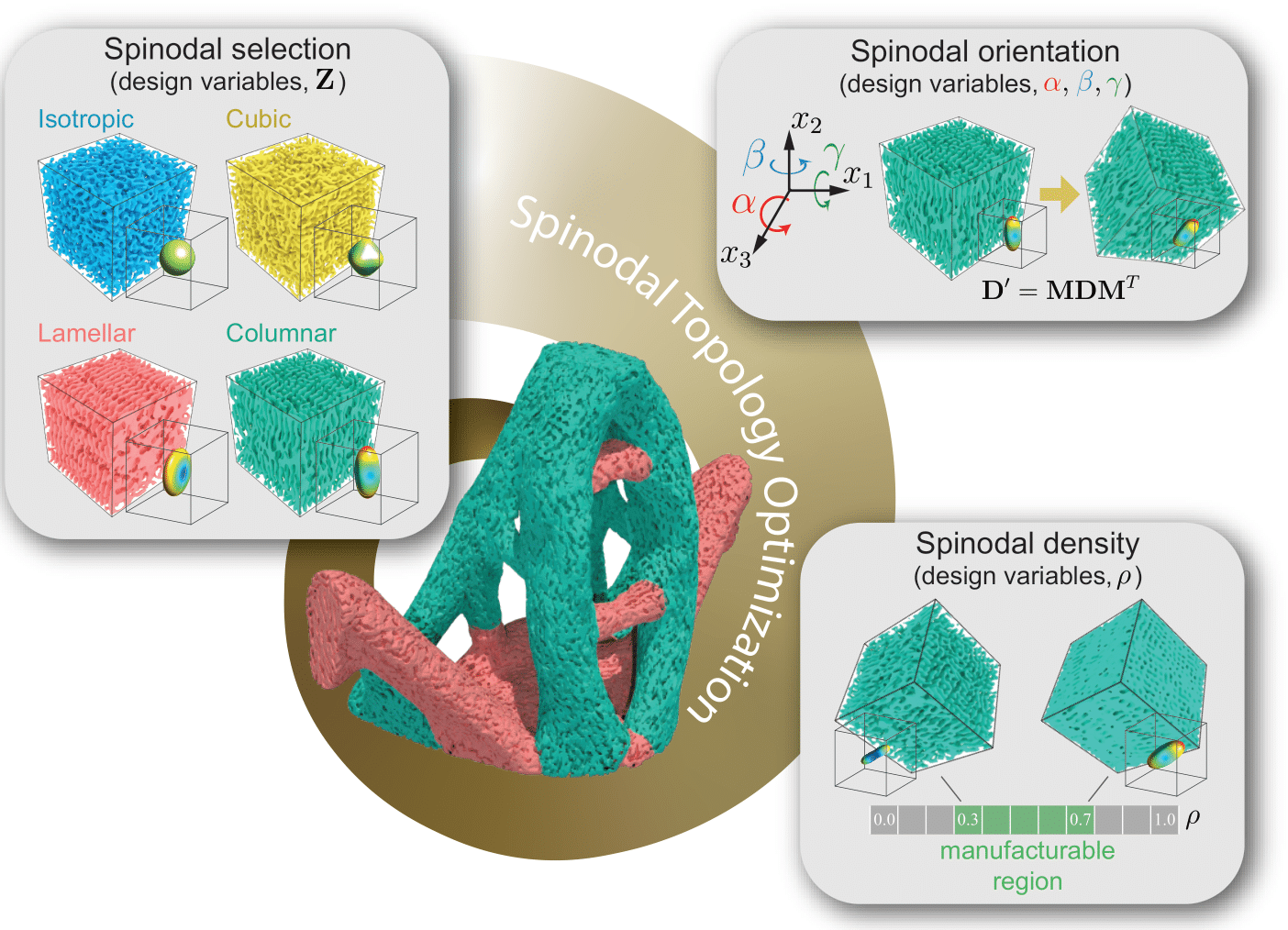
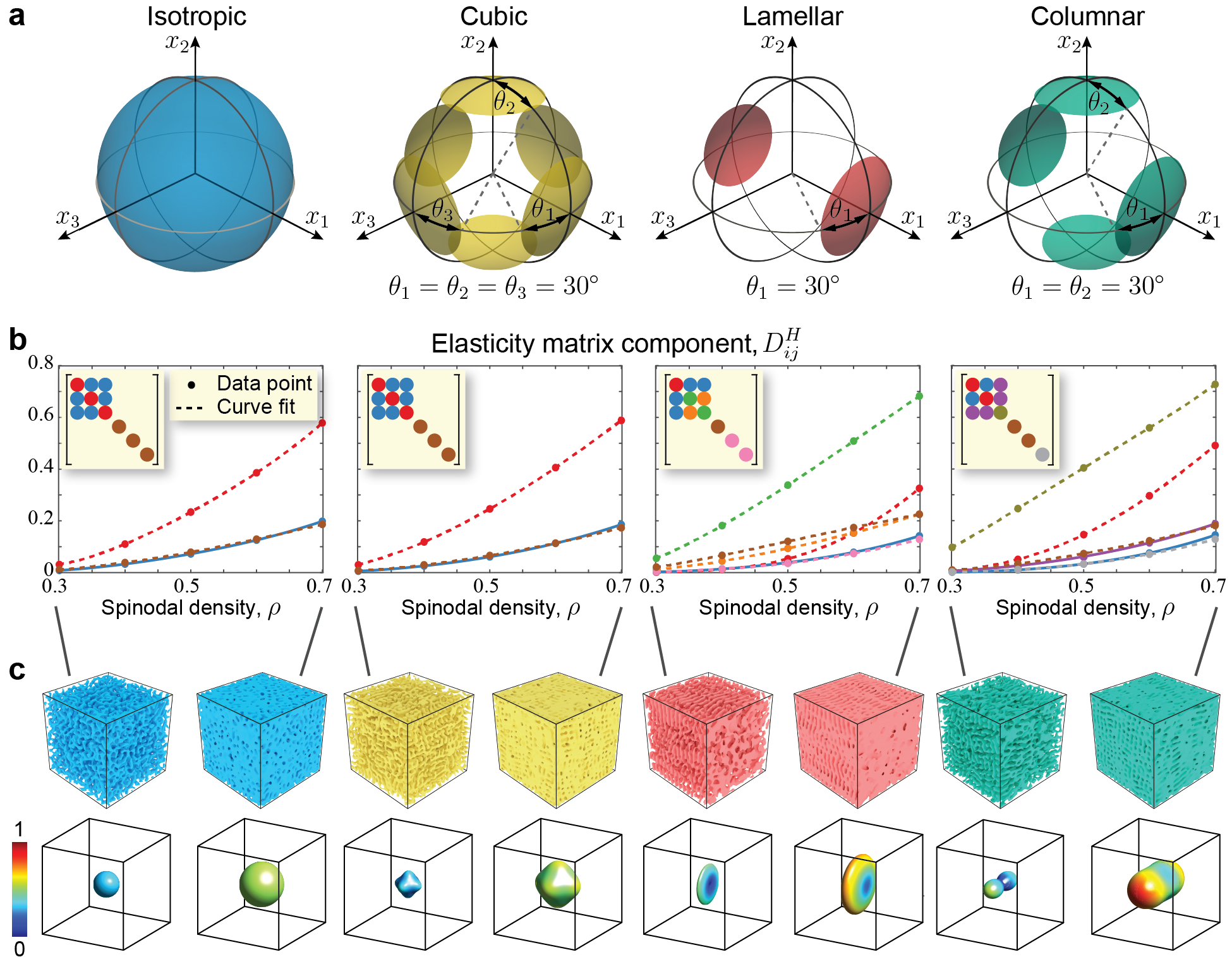
Prof. Glaucio H. Paulino and co-authors Prof. Emily D. Sanders and Fernando Senhora realized spinodal architected materials with tunable anisotropy which unify optimal design and manufacturing of multiscale structures. The spinodal framework enables bicontinuous, nonperiodic, unstructured, and stochastic nature of the material layout, which can be controlled to resemble microarchitectures as found in biological systems demonstrating a range of multifunctional purposes (e.g. enabling fluid transport, facilitating regrowth and repair, and resisting uncertain and temporally-varying mechanical demands). By locally varying the spinodal class, orientation, and porosity during topology optimization, a large portion of the anisotropic material space is exploited such that material is efficiently placed along principal stress trajectories at the microscale. The representation of spinodal architected materials also translates to multiscale, optimized designs with clear physical interpretation that can be manufactured directly, without special treatment at spinodal transitions unlike periodic structured architected materials. The physical models of the optimized, spinodal-embedded parts are realized using a scalable, voxel-based strategy to communicate with a masked stereolithography (m-SLA) 3D printer.
The work was published in Advanced Materials on March 16, 2022.
View Abstract
View Full Text (PDF)
View Supplementary Information (PDF)
Direct Link to Journal
 |
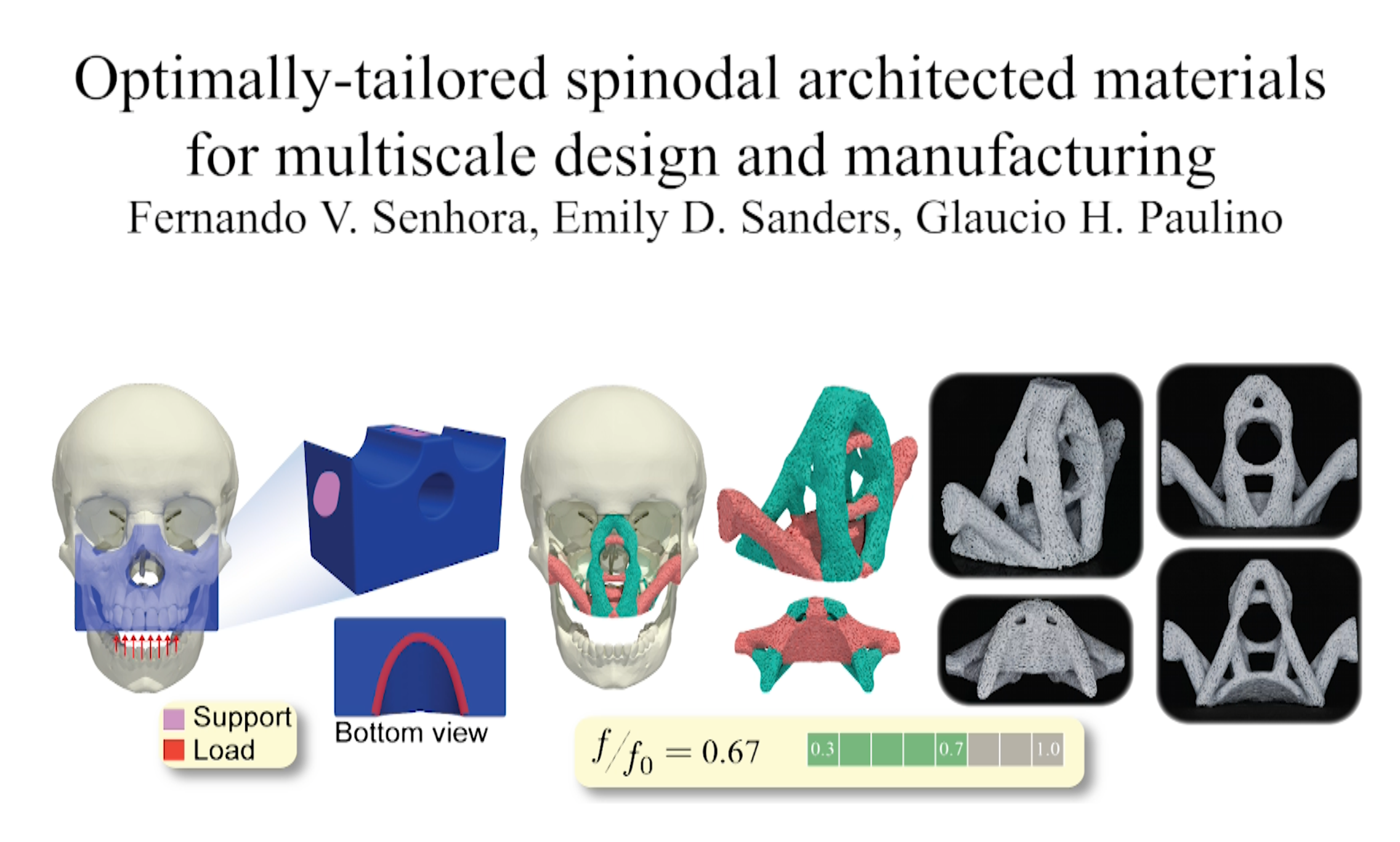 |
| Movie 1: Generation of the spinodal microstructure by adding random wave vectors | Movie 2: Optimization of a craniofacial implant considering spinodal architected materials |
Links and Press Releases
Online News Coverage